


What is it?
For years Vrbo told owners the same thing: earn your spot. Keep reviews high, accept bookings, don’t cancel, and the algorithm rewards you with better placement. No ad budget required. This has changed.
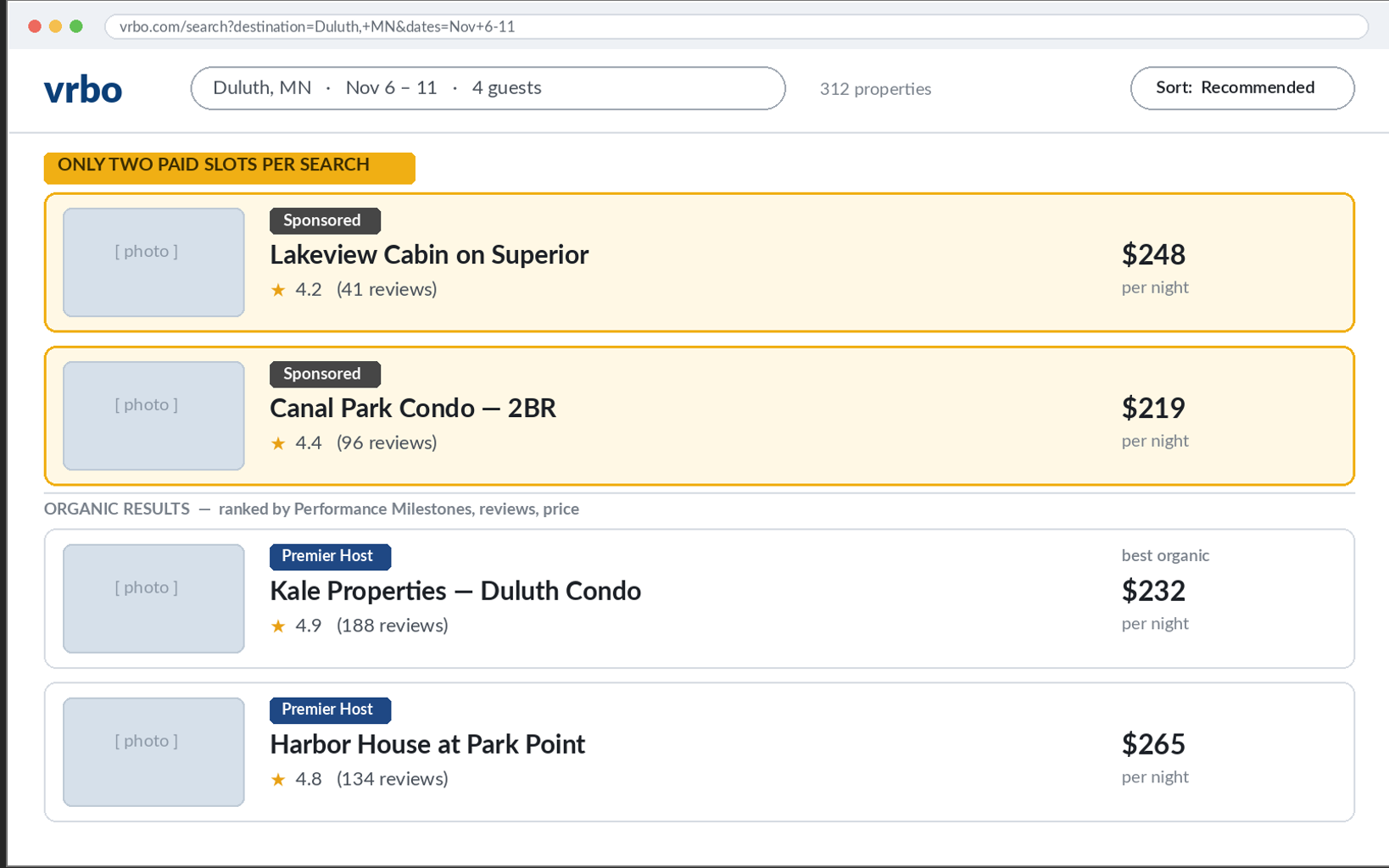
Vrbo Sponsored Listings went live in August 2026, after a spring pilot. Owners and managers now bid through the Expedia Group Advertising Portal for two paid slots that sit above every organic search result. Win a slot and your property is the first thing a traveler sees.
Here is the part that makes this different from almost every other advertising product: you pay per booked night, not per click. Travelers can look at your sponsored listing all day long and it costs you nothing. The fee only lands when someone actually reserves. Vrbo calls it “no-risk, all-reward.” On the downside, that is close to true, but depending on the bid, this can get very expensive fast.
The slots are not shown to everyone. A sponsored listing surfaces when a traveler’s search filters match the property — dates, guest count, amenities — so you are paying to jump the queue in front of people already looking for something like yours. Expedia has said these placements will eventually reach Expedia.com as well, which would widen the audience considerably.
How the bidding works
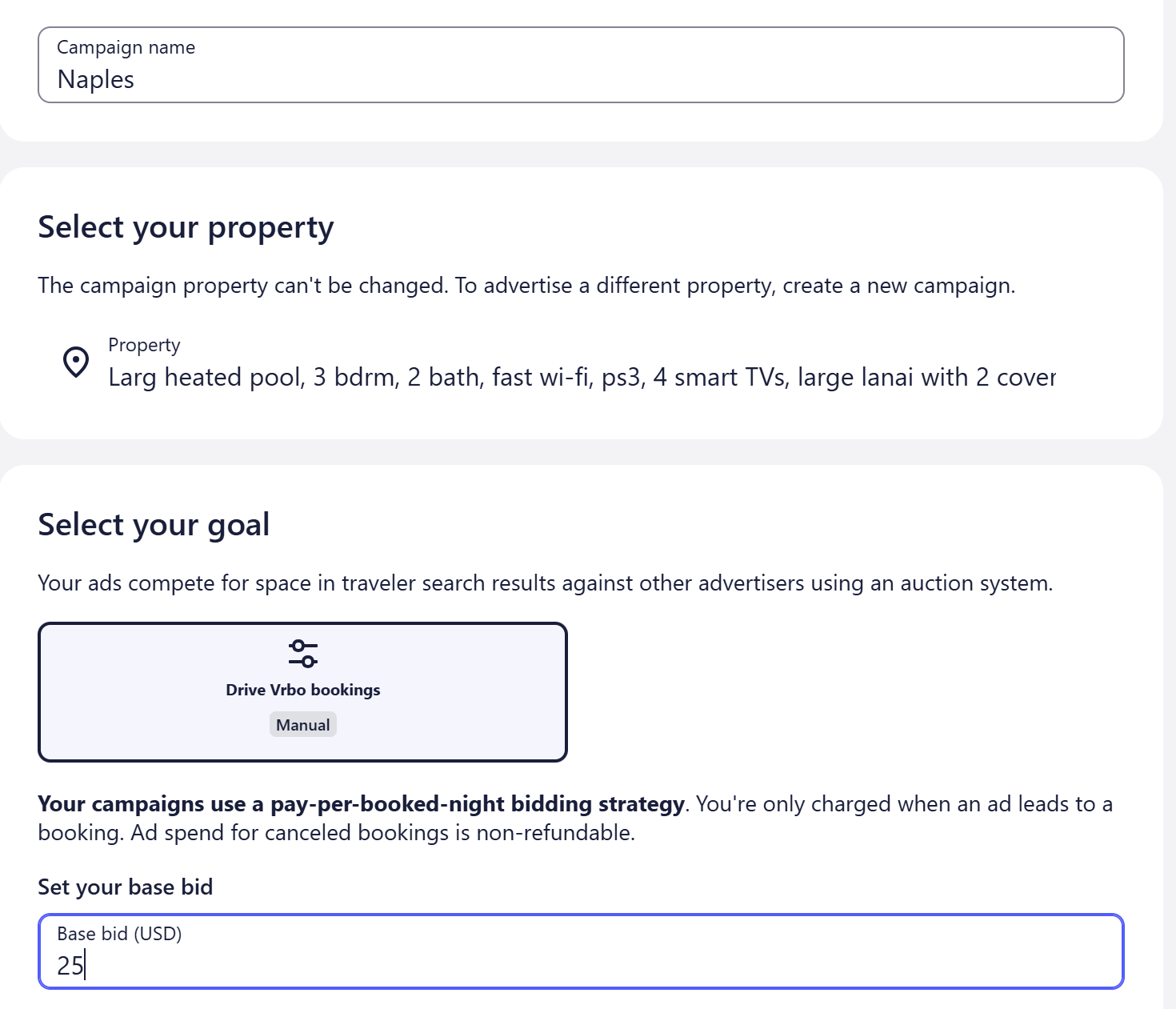
Once you onboard your property to the system, you create a campaign for a property. Like other advertising platforms, you pick a name and, instead of cost per click, enter a base per-night bid. This is the cost per night if a traveler not only clicks on your paid placement, but then books. So in the example below, we are bidding $25 per night. If a traveler books for 5 nights, a separate commission of $125 is due. This is on top of the existing VRBO commission and promotion we are already familiar with.
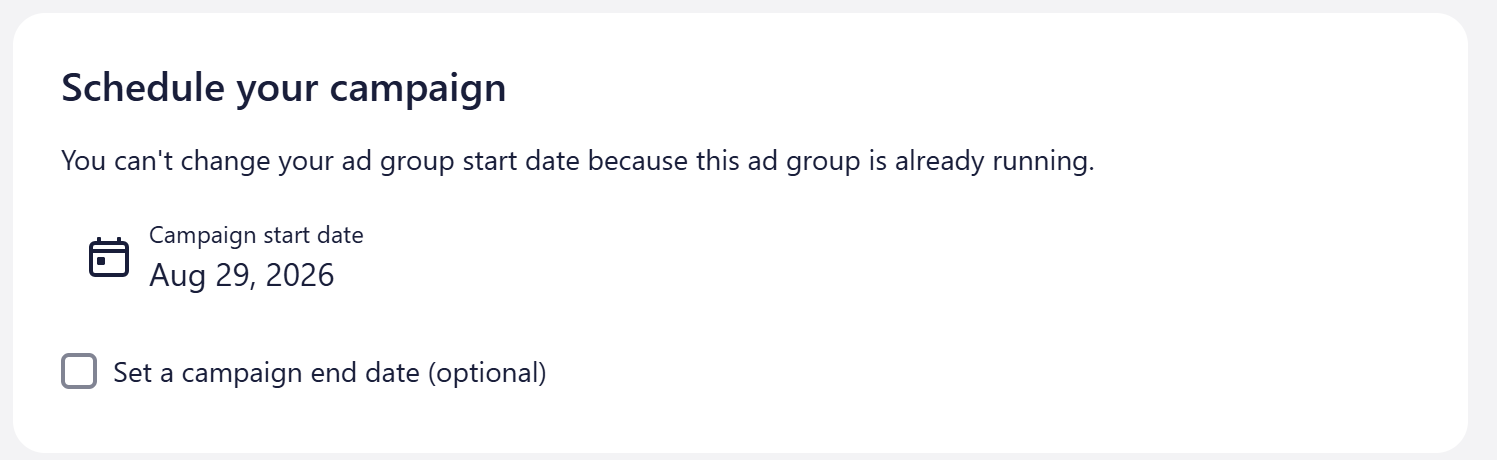
Like most campaigns you can also set an end date or run in perpetuity.
Ad modifiers
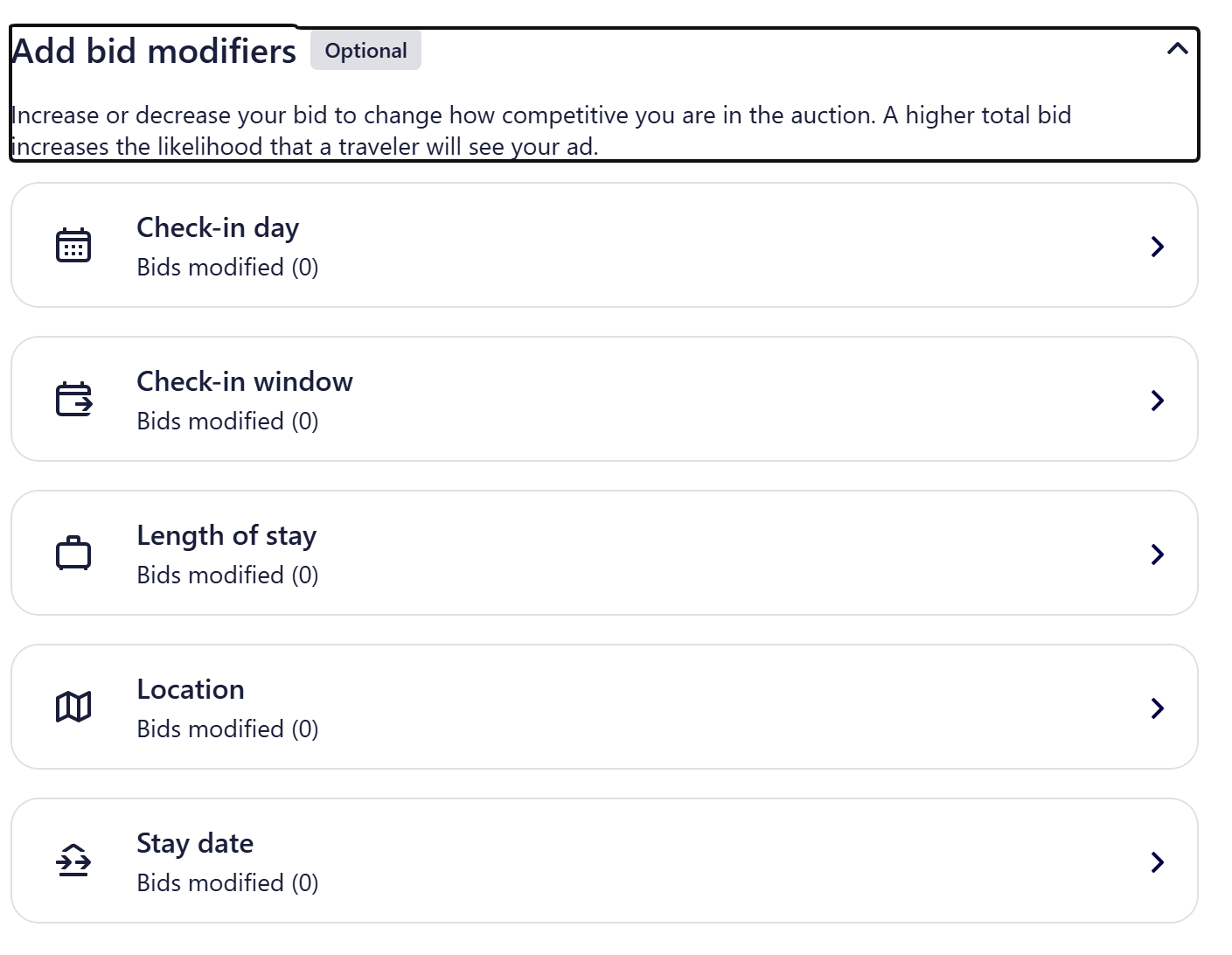
What we have found the most interesting are the ‘ad modifiers’. This allows for the bid to change depending on these parameters.
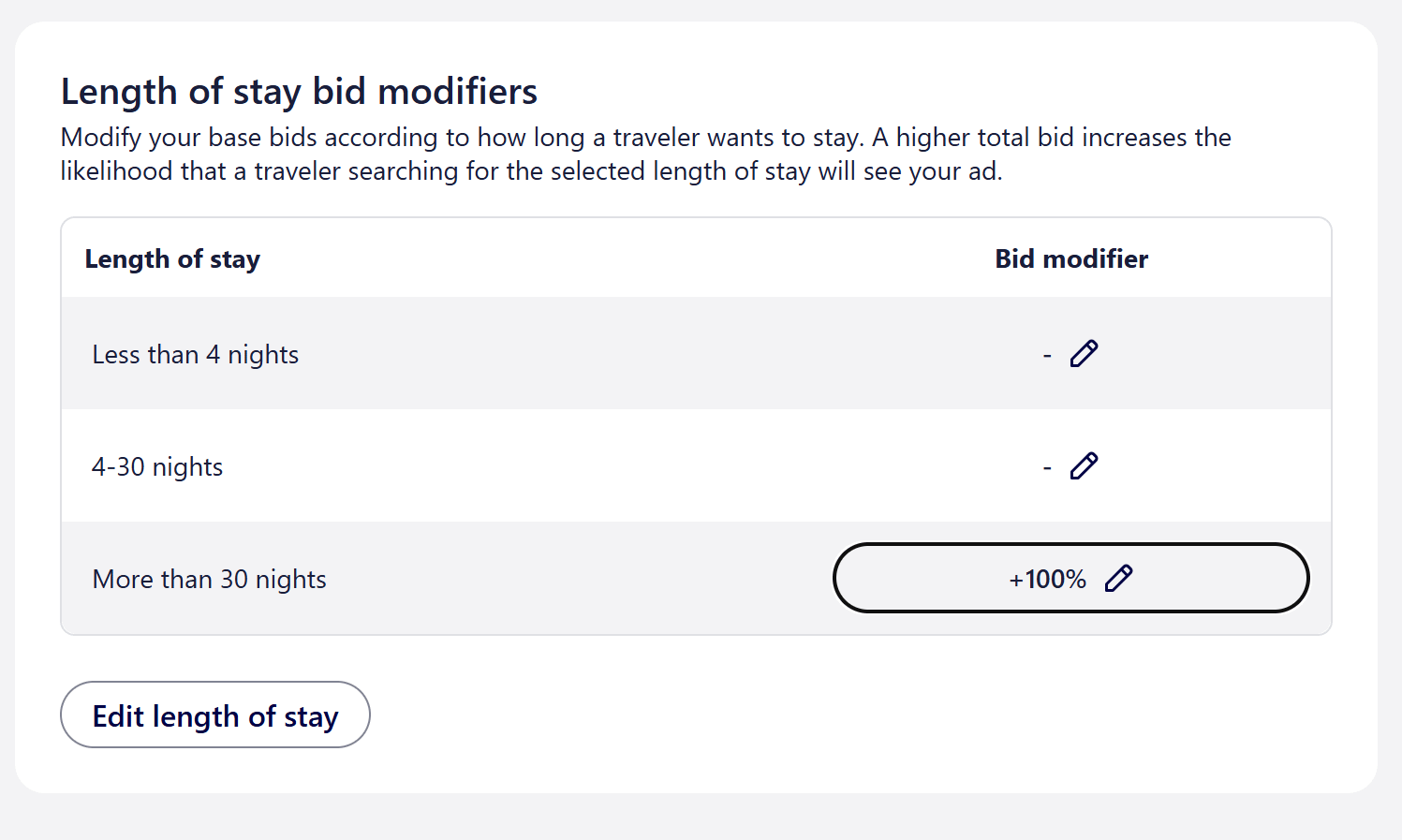
For example, let’s say we have a property in a competitive area with a certain number of snowbirds that book every winter. We can increase our bid by a percentage if the length of stay meets a threshold. In the screenshot below, we double our bid to $50/night if a stay is longer than 30 days. Remember, we only pay if a traveler books from our paid placement. So this could cost 30*50= $1500. Not cheap - but if the ADR is $350/night, could it be worth it?
Our recommended strategy
Our recommended strategy is to not overcomplicate. With the variety of parameters, one could create a very complicated and expensive campaign very quickly.
Here are our top recommendations.
If your listing is already in the top 10-15, there is no need to pay more for a booking you would already get.
If your market is small, you also don’t need to pay more.
Create a campaign to fill vacancies during the low and shoulder season in saturated markets.
This does NOT guarantee you will be booked. Travelers seldom click on the first listing and book, but it guarantees visibility.
Experiment and watch. Unfortunately, there is no easy way to know what the top bids are going for. In addition, it could change… let’s say someone has a week open and would rather get 50% rev than leave it open; they could bid 50% of the ADR. This guarantees exposure in a competitive market, so you need to monitor it constantly.
Another great strategy is for new properties with no reviews. This is again a great way to pay and guarantee visiblity.
Results
This new system just went live a couple of weeks ago. We need more data. However, from the couple of properties we have tested this on it has been positive.
For example, one property that is usually empty in September has allowed us to gain visibility and reach 90% occupancy, but at a premium. Normally, we would rather keep the property empty than lower the ADR and attract bad guests. This has allowed us to pay more, but attract good guests.
Let us know if you have any questions or want to discuss setting up a campaign for you.